A block-print studio owner in Sanganer typed a simple question into an AI assistant: “Who makes good cushion covers in Jaipur?” It named three studios. Hers wasn’t one of them. Two of the three had fewer products and smaller followings than she did. What they had was clearer pages, steadier details across the web and a few mentions from places she’d never thought about. Brands that run into this often start asking about AI search optimization services, and the useful first step is simply understanding how these tools seem to choose.
Here’s what we know, what we don’t and what you can do about it.
The short version, and one honest note
If you only have a minute:
- AI tools build answers from what they learned in training and, in some cases, from live web results
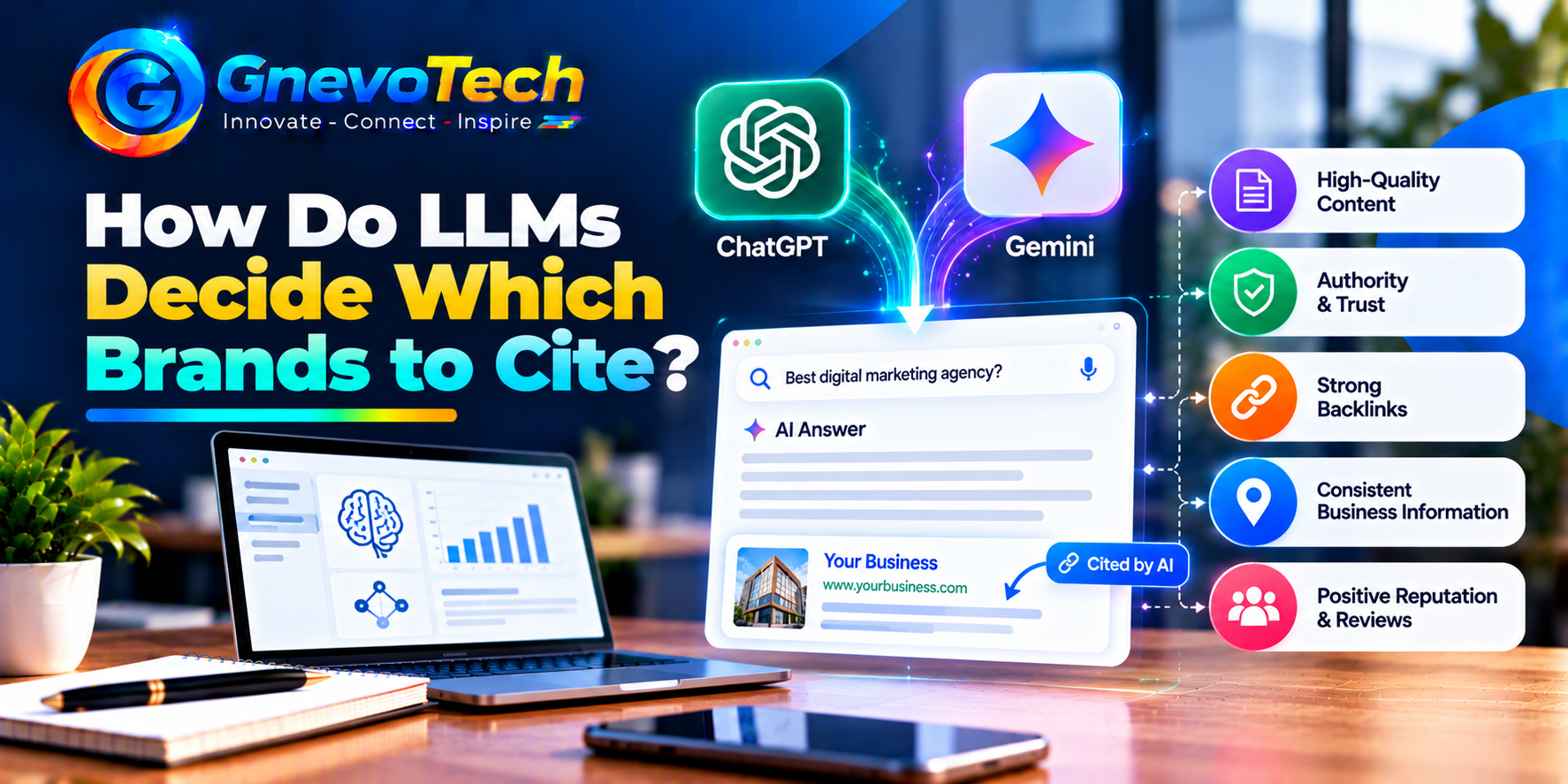
- They seem to favour content that is clear, consistent and backed by other trusted sources
- Real expertise and honest detail tend to stand out
- You can improve your chances, but you can’t control the outcome
The honest note: nobody outside the companies that build these tools knows the exact recipe, and each tool works differently and changes often. Anyone who claims to have cracked it is overselling. Everything below describes patterns that are widely observed, not rules.
Two ways an answer gets built
It helps to separate two situations, because they work differently.
- From memory. The model answers using patterns it picked up during training. It doesn’t look anything up. A brand that appeared often and clearly across many trustworthy sources in that training material is more likely to come to mind.
- From live search. Some tools search the web at the moment you ask, read a handful of pages and write an answer from them. Here, current, easy-to-read, well-structured pages have a better chance.
Many tools mix the two. That’s why you can’t treat it as one switch. Part of the work is long-term reputation, and part of it is the page someone can read today.
Signal one: a clear, direct answer
Tools that read pages tend to use content that answers a question plainly. If your page buries the answer under four paragraphs of introduction, it’s harder to quote.
- Write headings as the questions customers actually ask
- Put a short, direct answer in the first two or three lines
- Follow with detail, steps or examples
- Keep paragraphs short and focused
If a person can find your answer in ten seconds, a machine probably can too.
How this relates to traditional SEO
Much of this overlaps with search optimization. A page that can be crawled, loads quickly and is easy to read serves both worlds. Some teams that offer LLM SEO services treat the two as one joined-up job, and that’s a sensible way to see it. You don’t need to abandon what already works. You add habits that make your brand easier to understand and trust.
Where they differ is the goal. Search aims for a place in a list of links. AI answers aim for a mention inside a written reply, and that’s harder to measure.
Signal two: facts that agree with each other
If your name, address, phone number, services and hours differ between your website, listings and social profiles, tools may struggle to trust any of them.
- Decide on one correct version of each fact
- Update your website, Google Business Profile, directories and social pages to match
- Check marketplaces and partner sites that list you
- Review everything every few months
It’s dull, steady work. It’s also among the most useful things you can do, and it costs very little.
Signal three: real expertise on the page
Generic content is everywhere, and tools have plenty of it to choose from. What stands out is proof that someone with real experience wrote the page.
- Name your authors and say why they’re qualified
- Use examples from actual work, with private details removed
- Share a mistake and what it taught you
- Be upfront about limits, such as “this works for small teams, not large ones”
- Update older pages when facts change
Experience is hard to fake for long. Writers who haven’t done the work tend to describe it from a distance, and readers notice, and so, it seems, do the systems trained on what readers value.

Signal four: others vouch for you
A brand that only talks about itself is harder to trust than one that others talk about too. Tools seem to draw on the wider web to judge who’s credible.
- Genuine reviews on well-known platforms
- Features in industry blogs, news pieces and local publications
- Listings in respected directories
- Partner pages and customer stories
- Useful answers in communities where your buyers ask questions
Earn these honestly. Buying bulk links or posting fake reviews can backfire badly.
A local lens for Jaipur brands
Many questions to AI tools contain a place: a clinic in Malviya Nagar, a coaching class near Mansarovar, and a studio in Sanganer. If you serve a local area, say so plainly on your pages and keep your business profile accurate. Think about how your buyers phrase things, which often mixes Hindi and English, and let your content reflect real local language.
Brands that want specialist help with this detail sometimes look at LLM optimization services in Jaipur. Ask the provider to show relevant work and explain the scope in writing before you agree to anything.
Keep the technical basics healthy
A brilliant page that breaks on a phone helps nobody.
- Make pages load quickly on mobile
- Fix broken links and long redirect chains
- Keep your sitemap tidy
- Use secure connections everywhere
- Make sure important pages aren’t blocked from being read by mistake
Boring fixes like these keep the road clear between your content and the reader, human or machine.
What you can’t control
It’s worth saying out loud, because it saves disappointment.
- You can’t see exactly what a model learned in training
- You can’t force a tool to quote your page
- Different tools, and even the same tool on different days, can give different answers
- Competitors are improving too
Your job is to be the easiest brand to understand, verify and recommend. Whether a particular tool names you on a particular day is partly outside your hands.
How to check whether you appear
Measurement is the awkward part of this work. A single test proves very little, because answers vary by wording and by day.
- Write a list of twenty questions your customers really ask
- Ask them in a few different AI tools, in plain wording
- Note whether your brand is named, linked or described correctly
- Repeat monthly, and look for patterns, not single results
- Watch branded searches and enquiries, since people often look up a name they saw in an answer
Treat these as signals, not proof. A trend across several months tells you far more than one screenshot.

Claims worth treating with care
You’ll see plenty of agencies call themselves number one. When you come across the best LLM optimization agency in Jaipur, treat the phrase as a reason to ask more questions, not as proof. Read real case studies, speak with a past client if you can and get terms in writing. Be careful with guaranteed mentions, instant results or quotes that don’t say what’s included.
Mistakes we see all the time
- Treating this as a replacement for SEO instead of an extension
- Writing pages for machines and forgetting the person
- Letting business details drift between websites and listings
- Publishing generic content with no real expertise
- Chasing every new tool before the basics are right
- Paying for guarantees that nobody can honestly give
- Expecting results within a few weeks
Most come from impatience. Steady work tends to win.
A thirty-day starting plan
You don’t need a big budget to begin.
- Week one: Audit your website and listings, and fix inconsistent business details
- Week two: Write down twenty real customer questions and see how your pages answer them
- Week three: Rewrite your five most important pages with a direct answer, a real example and a clearer structure
- Week four: Ask for a few honest reviews, and check how your brand appears in a handful of AI answers
Then repeat the cycle each month.
Conclusion: Be the Brand That’s Easy to Trust
AI tools don’t publish a rulebook, but the patterns point in one direction: clear answers, consistent facts, real expertise and honest mentions from others. Build on strong SEO, measure trends over time and be wary of anyone who promises certainty in a field that keeps changing.
At Gnevotech, we help brands become clearer and more trustworthy across search and AI answers, so visibility grows from solid foundations and not from shortcuts.
Frequently Asked Questions
1. How do AI tools decide which brands to mention?
Nobody outside the companies knows exactly. Patterns suggest they favour clear, consistent, well-sourced content from brands that others also mention, and some tools also read live web pages.
2. Can I make an AI assistant cite my website?
Not on demand. You can make your pages easier to understand and trust, but no one controls whether a tool names you in a given answer.
3. Do reviews and mentions on other sites really matter?
They appear to help because they show that people outside your business vouch for you. Earn them honestly, since fake or bought ones can do harm.
4. How often should I check whether my brand appears?
Monthly works for most businesses. Use the same set of real customer questions each time, and look at patterns across several months instead of single results.