A wedding decorator in Jaipur once told us he put the same 5,000 rupees on three platforms in one month. Facebook sent a flood of “price?” messages. Instagram sent likes and saves, but very few calls. LinkedIn sent a single inquiry from a corporate event planner, and it turned into his biggest booking of the year. He decided all three “worked a bit”. They didn’t. Each had pulled in a different kind of attention, and he had never matched the platform to the buyer. Many owners reach this point and start looking at social media advertising services, yet the better first question is who you want to reach, and in what mood.
Here’s how we’d compare the three, using real buying situations.
Three platforms, three moods
The same person behaves differently depending on where they’re standing.
- Facebook: people check news, groups and family updates, and many are open to practical offers
- Instagram: people scroll for looks and ideas, so visuals do most of the talking
- LinkedIn: people are in work mode, reading about hiring, industry news and business tools
An ad that feels natural in one place can feel pushy in another. That mood is the part most budgets ignore, and it explains why identical ads give such different results.
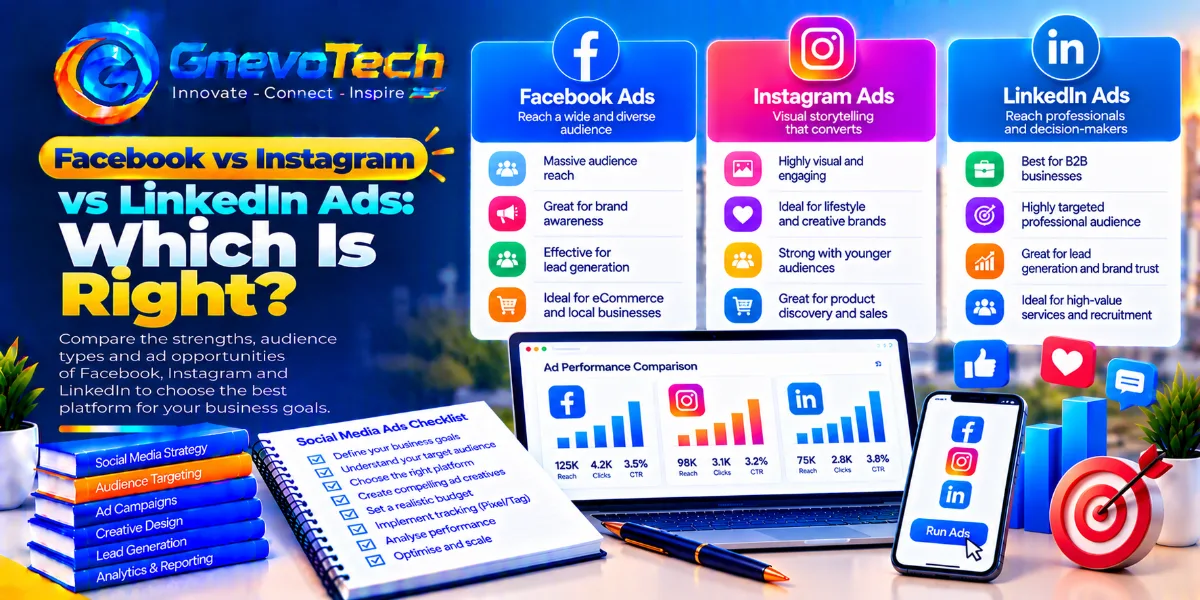
Facebook: broad reach, practical offers
Facebook still reaches a wide range of ages, and its targeting is detailed. That suits local, everyday offers, especially when the next step is simple.
It works well for:
- Clinics, classes, repairs and event bookings
- Offers with a clear price or a clear next step
- Lead forms and click-to-WhatsApp enquiries
- Reaching people who already visited your site
The risks are vague offers that bring weak leads, and creative that goes stale. Platform rules change often, so check Meta’s official help pages before you rely on any feature.
Instagram: visuals first
Instagram suits businesses where a picture does the selling. Food, fashion, jewellery, interiors, beauty and events often do well, because people browse there for ideas, not for errands.
- Shoot for a phone screen, not for a brochure
- Show the product or the result in the first second
- Keep captions short and the next step obvious
- Try Stories and Reels, since people use them differently from the feed
It also eats fresh creative. A weak image burns money quickly, so plan to make more pictures than you think you need.
LinkedIn: precise, professional, pricier
LinkedIn lets you target by job title, industry, company size and seniority. That helps when you sell to businesses, though clicks usually cost more than elsewhere.
It fits:
- B2B services such as software, training and industrial supply
- High-value sales where one customer is worth a great deal
- Hiring and employer branding
Audiences can run out fast, and brochure-style ads fall flat. Specific, helpful content does better, such as a short guide, a clear case example or a plain answer to a buyer’s worry.
Side by side
| Point | |||
| Mood | Practical | Visual | Professional |
| Best for | Local offers | Product-led brands | B2B, high-value deals |
| Targeting | Interests, location | Similar, with a visual lens | Job title, industry |
| Click cost | Often lower | Varies | Often higher |
| Main risk | Weak leads | Weak visuals | Small audiences |
Costs differ by industry, city and offer, so we haven’t quoted figures. Treat the table as a guide, not a rule.
Five buyers, five answers
- A restaurant in Malviya Nagar: Instagram for the food, Facebook for local offers
- A coaching center: Facebook for parents, with a simple lead form
- A B2B software firm: LinkedIn, aimed at specific job titles
- A jewellery brand: Instagram first, then retarget on Facebook
- A manufacturer looking for distributors: LinkedIn for decision-makers
Find the one nearest to you before you start comparing budgets. That single step often settles most of the question.
How the three can work together
Many businesses end up using more than one platform, and that’s fine when each has a job. A common pattern is simple. Instagram introduces the brand with strong visuals. Facebook follows up with a practical offer for people who showed interest. LinkedIn reaches the decision-makers when the sale is to a company. Before you build anything like this, make sure one platform already works on its own. Adding a second to a shaky first only doubles the confusion. Keep a single sheet that records leads from every source, so the platforms don’t each claim credit for the same customer.
If you’d rather hand it over
Some owners run their own campaigns. Others want someone to handle creative, targeting and reports. Before you sign with a social media marketing agency in Jaipur, ask:
- Which platform would you pick for us, and why?
- Will the ad account stay in our name, with full access for us?
- Who makes the visuals, and who approves them?
- Do you report on clicks, or on inquiries and customers?
- Which parts can you not control?
A good agency answers calmly and admits uncertainty. A weak one says every platform will work.
Make the offer fit the platform
Ads fail more often because of the offer than because of the platform.
- Say who it’s for in the first line
- Make the benefit concrete, such as same-day booking, if it’s true
- Tell people exactly what to do next
- Send them to a page that matches the ad
- Make the form or phone number easy to use on a phone
An honest offer filters out wrong clicks and saves budget. A decorator who says “bookings open for November weddings only” will get fewer clicks and better ones.
Test small, test fairly
You don’t need to try all three at once. A clean test teaches more than a crowded one.
- Pick one goal, such as inquiries or bookings
- Run one platform at a time, or split the budget in a clear way
- Change one thing per test: the image, the headline or the audience
- Wait for a fair amount of data before judging
- Write down what changed and what happened
A plain notebook beats memory every time.
Count customers, not clicks
Clicks and likes feel good. Customers pay the bills.
- Track calls, forms and WhatsApp taps
- Tag the source of each lead
- Ask your team which leads were genuine
- Compare cost per customer, not only cost per lead
Sometimes the pricier lead turns out to be the cheaper customer.
The Jaipur angle
Jaipur audiences respond to local language, festivals, wedding seasons and neighborhood names, often in a mix of Hindi and English. Creative that sounds like the city feels real, and feeling real is half the battle.
Owners who want help with strategy, creative and reporting without building a team sometimes look at social media marketing services in Jaipur. Ask for the scope in writing, a sample of similar work and a clear answer on who owns the accounts.
Keep the creative fresh
People stop noticing an ad they’ve seen ten times.
- Refresh images and headlines regularly
- Keep one winning idea, but change how it looks
- Use real photos of your work and your team
- Watch for rising costs, which is often an early sign of fatigue
Fresh does not mean random. Keep the same promise, and change only the look.
Time your spending
Spend follows the calendar. Wedding season, Diwali and exam months change who is listening.
- Plan bigger pushes around your own busy periods
- Keep a smaller steady budget in quieter months
- Check results weekly, but judge them over several weeks
- Pause what clearly isn’t working, and note why
Retargeting without being annoying
Retargeting shows ads to people who already visited your site or watched your video. It’s often cheaper per inquiry because these people know you. It can also irritate them if the same ad follows them around for weeks. Set a sensible limit on how often and for how long an ad appears. Change the message for people who have already inquired, so they see a thank-you or a reminder instead of the same pitch. Keep your audience lists tidy, and follow privacy rules and platform policies, which differ and change.
Slips that waste money
- Boosting posts without a goal
- Sending every click to the home page
- Ignoring lead quality
- Judging results after a few days
- Spreading a small budget across too many platforms
Most of these come from impatience.
Reading titles with a pinch of salt
Plenty of agencies call themselves the top choice. When you meet the phrase best social media marketing agency in Jaipur, treat it as a cue to ask for proof, not as proof itself. Look for case studies you can read, a past client you can speak with and terms in writing. Nobody can promise a number of leads, a cost per lead or a date for results, because outcomes depend on your offer, your audience, your creative and platform rules that change often.
Questions to carry into your next review
- Which platform brought real customers, not just clicks?
- What did we change, and what happened afterwards?
- Which creative is getting tired?
- What will we test next?
Conclusion: Go Where Your Buyer Already Is
Facebook suits broad, practical offers. Instagram rewards strong visuals. LinkedIn reaches professionals at a higher price. Start from your customer, test one platform properly, track real customers and adjust as you learn. Be wary of anyone who promises certainty in a field that keeps changing.
At Gnevotech, we help businesses make clear, practical advertising choices, so growth rests on solid foundations and not on shortcuts.
Frequently Asked Questions
1. Which platform is best for a small local business?
Facebook often suits local offers, and Instagram suits visual products. Start with one, test it properly and track real inquiries.
2. Is LinkedIn too expensive for small businesses?
Clicks usually cost more, but it can pay off for B2B and high-value sales. If your customers aren’t professionals, other platforms may fit better.
3. Can I run ads on all three platforms together?
You can, but a small budget spread thin teaches little. Test one or two first, then expand based on results.
4. How long should I run a test before deciding?
Long enough to gather a fair amount of data, usually a few weeks, depending on your budget. Avoid changing everything every few days.