
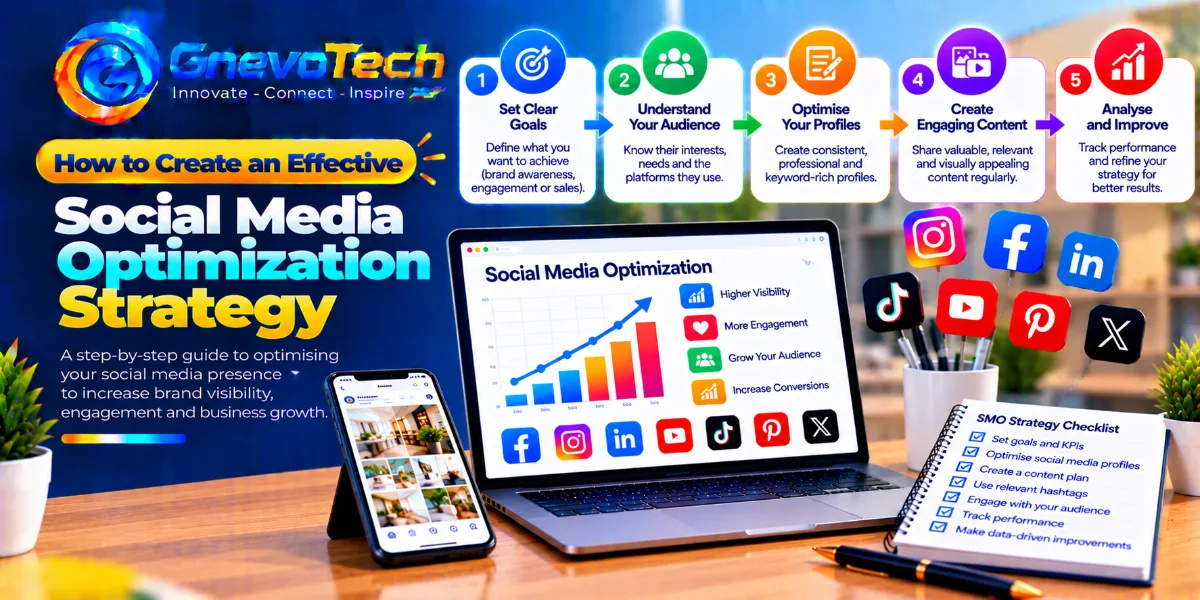
A blue pottery shop owner in Jaipur showed us her Instagram page and asked why nobody found it. The photos were beautiful. The name on the profile was a nickname. The bio said “Art is life”. There was no city, no link and no hint of what she sold. A tourist searching for blue pottery would have scrolled straight past. She didn’t need more posts. She needed her page to be easier to find, read and trust. Many owners reach this point and start looking at SMO strategy services, but the first improvements are small and mostly free.
Here’s how we’d build the strategy, layer by layer.
What social media optimization actually means
Social media optimization, or SMO, is the work of improving your profiles and content so the right people can find you, understand you and act. It isn’t the same as paid advertising, which buys attention. SMO earns it by getting the basics right.
- It covers profiles, bios, names and links
- It covers how posts are written, labelled and timed
- It covers how people find you inside each platform
- It covers how social pages connect to your website
Think of it as tidying and signposting a shop, not adding new stock.
Layer 1: Fix the profile first
Your profile is the page people check before deciding to follow, message or buy.
- Use your real business name, or something customers already recognize
- Write a bio that says what you do, where and for whom
- Add one clear link, such as your website or a booking page
- Use a clean logo or photo that stays readable when small
- Add a call to action, such as “Message us to order”
If a stranger can’t tell what you sell within five seconds, rewrite the bio.
Check how the profile looks on a small phone screen, since most visitors see it there.
Layer 2: Make your content easy to find
People now search inside social apps, so wording matters. Use the phrases your customers actually type.
- Put the main idea in the first line of the caption
- Add a few relevant hashtags, not thirty
- Write alt text that describes images in plain sentences
- Name your location and product in captions and profile fields
- Use on-screen text and spoken words in videos, since both can help people find them
If a sentence sounds odd read aloud, the keyword was forced. Rewrite it.
Check your own comments for the words people use, and borrow them.
Layer 3: Pick formats and times from your own data
Advice about the best time to post is often generic. Your followers have their own habits, and your analytics can show them.
Some businesses use SMO services to run this analysis for them, which helps when time is short. If you do it yourself, the method is simple: check which posts earned saves and replies, note the days and hours, and repeat what worked. Test one change at a time, so you know what caused the result.
Layer 4: Build small engagement loops
Algorithms tend to favor posts that people respond to, so give people a reason.
- Ask one specific question at the end of a caption
- Reply to comments within a day
- Answer questions in a follow-up post, naming the person who asked, with permission
- Pin your most useful post, so new visitors see it first
A loop is simple: a post prompts a reply, the reply prompts another post. Nobody can force an algorithm, but you can make responding easy.

Layer 5: Use short formats and highlights
Short videos, stories and highlights give your profile more than one way to be found.
- Turn your best answers into short videos, with spoken keywords and on-screen text
- Save useful stories as highlights, grouped by topic such as Prices, Delivery or Care
- Reuse one idea in several formats, instead of starting fresh each time
- Keep the first three seconds clear, since people decide fast
Highlights act like shelves in a shop window. A new visitor can browse them without scrolling through months of posts. Name each one in plain words, not clever ones.
Layer 6: Keep a consistent look and voice
Consistency makes a page feel trustworthy. It doesn’t mean looking identical every day.
- Use the same name, logo and colours across platforms
- Choose a few fonts and stick to them
- Write the way you talk to a customer at the counter
- Keep a short list of words you always use and ones you avoid
When someone moves from your Instagram to your Facebook, it should feel like the same shop.
Create a one-page style note with your name, colours, tone and a few sample captions so anyone posting for you sounds the same.
Layer 7: Add local signals for Jaipur
Local detail helps people and platforms understand where you operate. Jaipur audiences respond to festivals, wedding seasons and familiar neighborhoods, often in a mix of Hindi and English.
- Tag your location in posts and stories
- Mention the market or colony where you work
- Share local moments, such as Teej, Diwali or a city event
- Keep your address and hours the same on every platform
Owners who want help with this kind of local detail sometimes look at SMO services in Jaipur. Ask for the scope in writing, a sample of similar work and a clear answer on who owns the accounts.
Layer 8: Connect your social pages to your website
Social pages work best when they send people somewhere useful.
- Link to a page that matches the post, not just the home page
- Add social links in your website’s header or footer
- Make sure the website loads quickly on a phone
- Keep your business details identical on both
A clear path between the two lets customers move from interest to action without getting lost.
Even a small tweak, such as a clearer button, can raise the number of people who actually enquire.
Measure what the optimization changed
Likes are pleasant but shallow. Look at signs that people found you and acted.
- Profile visits and link clicks
- Saves, shares and meaningful replies
- Messages, calls and bookings that came from social media
- Searches that led people to your page, where the platform shows them
Compare similar posts, and give changes a few weeks. One quiet post means little, and nobody can promise a fixed amount of reach or followers.
Take a screenshot of your numbers once a month, so you can see the direction.

A quarterly tune-up
SMO is never finished. Platforms and customers both change. Once a quarter, run a short check.
- Re-read your bio and links. Are they current?
- Review your top ten posts. What do they have in common?
- Scan your hashtags and captions. Are they still the words customers use?
- Check your tags and location details
- Decide one thing to stop, keep and change
One page of notes is enough. Keep it where your team can see it.
Treat it like servicing a vehicle. Small, regular checks prevent expensive repairs, and they take far less time than a full rebuild after something breaks.
Traps that waste effort
- Buying followers or engagement packages
- Stuffing captions with unrelated hashtags
- Using a different name on each platform
- Ignoring messages and comments
- Changing everything at once, then not knowing what worked
Most of these come from impatience, and they’re easy to avoid.
Choosing a partner for the long run
Some businesses want help beyond the basics. If you’re comparing an SMO agency in Jaipur, ask for proof, not promises. Look for case studies you can read, a past client you can speak with and terms in writing. Then ask:
- Who will actually work on our accounts?
- Will the accounts stay in our name, with full access for us?
- Do you report on inquiries and customers, or only on likes?
- Which parts can you not control?
A good agency answers calmly and admits that results vary.
A simple before-and-after record
Keep a record of what you changed, so improvement isn’t a memory contest. Write down the date, the change and what happened over the next few weeks. Screenshots of the profile before and after help too. When someone asks whether the optimization worked, you’ll have an answer based on notes, not feelings. If a change did nothing, that’s useful to know as well. It tells you where not to spend time.
The blue pottery shop, a few months on
The pottery shop owner changed her name to the one customers searched for, added “Jaipur blue pottery” to her bio and put a booking link in her profile. She added alt text to her best photos, replied to every comment and tagged the market where she sells. Profile visits rose gradually and a few tourists messaged to ask about shipping. It wasn’t dramatic, and results differ for every business. But her page finally explained itself.
Conclusion: Make Your Page Easy to Find and Easy to Trust
An effective social media optimization strategy starts with a clear profile, searchable content, a consistent voice and honest measurement. Do the small things well, review them often and ask for evidence from anyone who offers help. Start with the profile today. Small fixes add up. Be wary of anyone who promises certainty in a field that keeps changing.
At Gnevotech, we help businesses make their social presence clearer and easier to trust, so growth rests on solid foundations and not on shortcuts.
Frequently Asked Questions
1. What is social media optimization?
It’s the work of improving your profiles, content and links so the right people can find you, understand you and take action, without relying on paid ads.
2. How is SMO different from social media marketing?
SMO focuses on optimizing your profiles and content so they work better. Marketing is broader and can include campaigns, ads and promotions.
3. How long does social media optimization take to work?
It varies with your audience, platform and consistency. Give changes a few weeks, then adjust based on real visits, replies and inquiries.
4. Can I do SMO myself?
Yes, many basics can be handled in-house. Help makes sense when you lack time or want a second opinion on what to change first.