
A wedding photographer in Jaipur once paid for fifty links from a package he found online. Within a month his backlink count looked impressive. Within three months his inquiries had dropped. The links came from pages that had nothing to do with weddings, photography, or Rajasthan, and a few of them looked like spam farms. He had bought numbers when he needed trust. Many owners in this position start asking about off-page SEO services, but the first step is understanding what a good link actually is.
Here’s how we’d approach it, one idea at a time.
The short version, and one honest note
If you only have a minute:
- A good link is a recommendation from a relevant, trusted site
- A few real links beat hundreds of poor ones
- The best links come from having something worth linking to
- Local, industry and partner mentions are often the easiest wins
- Bought, swapped-in-bulk, or hidden links can do real harm
- Results take months, not days
The honest note: nobody can promise a ranking, and we won’t. Links are one signal among many, alongside content quality, relevance and technical health. Google also updates its guidance, so check its official help pages, especially on link spam, before you act.
What a link really means
A link from one site to another works like a recommendation. If a respected local newspaper links to your page, it’s telling its readers that you’re worth a visit. Search systems read those recommendations too and use them as one clue about who is trusted.
Not every recommendation counts the same. A link from a relevant, reputable page with real readers carries weight. A link from a page that exists only to sell links carries little and can sometimes cause trouble.
What has stopped working
Some tactics survive mostly because sellers keep promoting them.
- Buying packages of links from unknown sites
- Large-scale link swaps with unrelated websites
- Comment and forum spam with a link dropped in
- Directories created only to hold links
- Hidden links, or links placed in unrelated articles
- Private networks of sites built to pass links around
Google has long said that links made to manipulate rankings can break its spam policies. Even when they appear to work for a while, the risk grows over time.
What actually works
Almost every lasting method comes down to one idea: give people a reason to mention you.
- Make something worth linking to. A useful guide, a clear tool, original data or a well-explained case study
- Earn mentions through real relationships. Suppliers, partners, event organizers, and customers often link to businesses they work with
- Share expertise. Offer a quote or short explanation to journalists, bloggers and podcasters in your field
- Show up locally. Sponsorships, local associations and community events often come with a link
- Fix and reclaim. Find places that mention your brand without linking, and politely ask for a link
None of these is fast. All of them age well.
Step 1: Start with a page worth linking to
Outreach to a weak page gets ignored. Before you contact anyone, ask honestly why a stranger would link to it.
- Does it answer a question better than what already exists?
- Does it contain something original, such as your own experience, numbers or examples?
- Is it easy to read, quick to load and clearly attributed to a real author?
- Does it solve a problem that people in your field actually have?
If the answer is no, improve the page first. A strong page makes every later step easier.
When a specialist helps
Plenty of this can be done in-house. Others lack the time, contacts or experience to run outreach properly. If you’re comparing an off-page SEO agency in Jaipur, a few plain questions keep the conversation honest.
- Can you show real links you’ve earned for businesses like mine, with context?
- How do you find and approve the sites you contact?
- Do you ever buy links, and what’s your policy on that?
- What will I receive each month, in plain terms?
- What can’t you control?
A good provider answers calmly and admits uncertainty. A weak one leans on numbers and guarantees.

Step 2: Build relationships, not lists
Outreach works better when it feels like a conversation between two people.
- Find sites and writers who already cover your topic
- Read what they publish before you write
- Offer something useful, not a request for a favour
- Keep messages short, specific and polite
- Follow up once, then leave it alone
Mass emails with the same text to a thousand strangers rarely work. Ten well-chosen, personal messages often do better.
Step 3: Use your local advantage
Local links are some of the most natural ones a small business can get, because real organizations in the same area have real reasons to mention you.
- Local business associations and chambers
- Event pages where you sponsor or take part
- Suppliers, partners and neighboring businesses
- Local news sites and community blogs
- Colleges, schools and training centers you work with
In Jaipur, that might mean a craft fair, a trade body, a local magazine or a college partnership. These links also support your Google Business Profile and local visibility.
For businesses that want help planning this across several markets, off-page SEO services in Jaipur can fill the gap, provided the provider explains the method in writing and shows similar work first.
Step 4: Create content people want to cite
Some content naturally attracts links.
- Original data, even from a small survey of your customers
- Plain-language explainers of confusing topics
- Free tools, templates or checklists
- Detailed case studies with real results and honest limits
- Roundups that quote real experts, who then tend to share them
The common thread is usefulness. A page that saves someone time is one that people link to.
Step 5: Reclaim what you already have
Some of the easiest links are already half-earned.
- Search for your brand name and see who mentions you without linking
- Check for broken or outdated links that used to point to you
- Look for old press coverage and partner pages
- Ask politely for a link or a fix, and make it easy by giving the exact address
A short, friendly note often works, because you’re asking for something small that improves their page too.
Step 6: Think about quality, not totals
When you review a possible link, a few quick checks help.
- Is the site real, with genuine content and an audience?
- Is it relevant to your topic or location?
- Would the link make sense if search engines didn’t exist?
- Is the page where the link appears actually read by people?
- Does the site sell links openly, or fill pages with unrelated ones?
If you wouldn’t be comfortable explaining the link to a customer, you probably shouldn’t have it.

How AI answers fit in
More people now ask an AI assistant a question and read a written reply. Mentions on trusted sites appear to help brands look credible to these tools as well. Nobody can promise that a particular page will be quoted, but earning honest mentions helps both your search presence and your reputation.
How to measure progress
Counting links alone can mislead. Look at a few things together.
- New links and mentions, and where they come from
- Whether the pages that gained links are moving in search
- Referral visits from those sites
- Branded searches and direct inquiries
- Anything unusual, such as sudden spammy links, which you should note and review
Give new efforts a few months before judging. Links take time to be found and counted.
Claims worth treating with care
You’ll see plenty of agencies call themselves number one. When you come across the best off-page SEO agency in Jaipur, treat the phrase as a reason to ask more questions, not as proof. Read real case studies, speak with a past client if you can and get terms in writing. Be careful with guaranteed rankings, a fixed number of links per month or quotes that don’t say what’s included.
Mistakes we see all the time
- Buying links because the price looks low
- Chasing numbers instead of relevance
- Sending the same email to hundreds of strangers
- Pointing every link at the home page
- Ignoring the quality of the page being promoted
- Forgetting to check the sites that link to you
- Expecting results within a few weeks
Most come from impatience. Steady, honest outreach tends to win.
A thirty-day starting plan
You don’t need a big budget to begin.
- Week one: Pick two or three pages worth linking to, and improve them
- Week two: List twenty relevant sites, partners and local groups, and read what they publish
- Week three: Send ten personal messages and reclaim any unlinked mentions you found
- Week four: Check results, note what worked and plan the next month
Then repeat the cycle, keeping what works and dropping what doesn’t.
Conclusion: Earn Links by Deserving Them
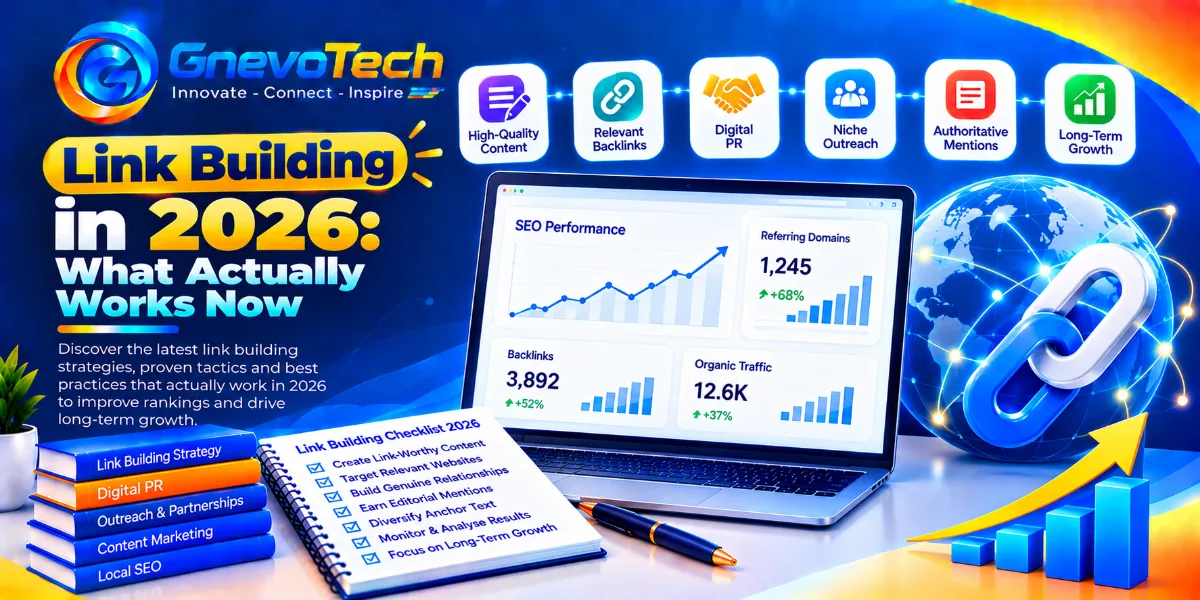
Link building in 2026 comes back to a simple idea: be worth recommending. Make useful pages, build real relationships, use your local strengths and treat quality as more important than totals. Be wary of anyone who promises certainty in a field that keeps changing.
At Gnevotech, we help businesses earn trust the honest way, so visibility grows from solid foundations and not from shortcuts.
Frequently Asked Questions
1. Do backlinks still matter in 2026?
Yes, as one signal among many. Relevant links from trusted sites still help, but content quality, relevance and technical health matter too.
2. Is buying backlinks safe?
It’s risky. Google has said that links created to manipulate rankings can break its spam policies, so bought links can lead to penalties or wasted money.
3. How many links do I need?
There’s no magic number. A small set of relevant, genuine links usually beats a large pile of weak ones, and it depends on your competition.
4. How long does link building take to show results?
It varies with competition and the quality of your pages. Give new efforts a few months before judging, and keep improving based on what you learn.